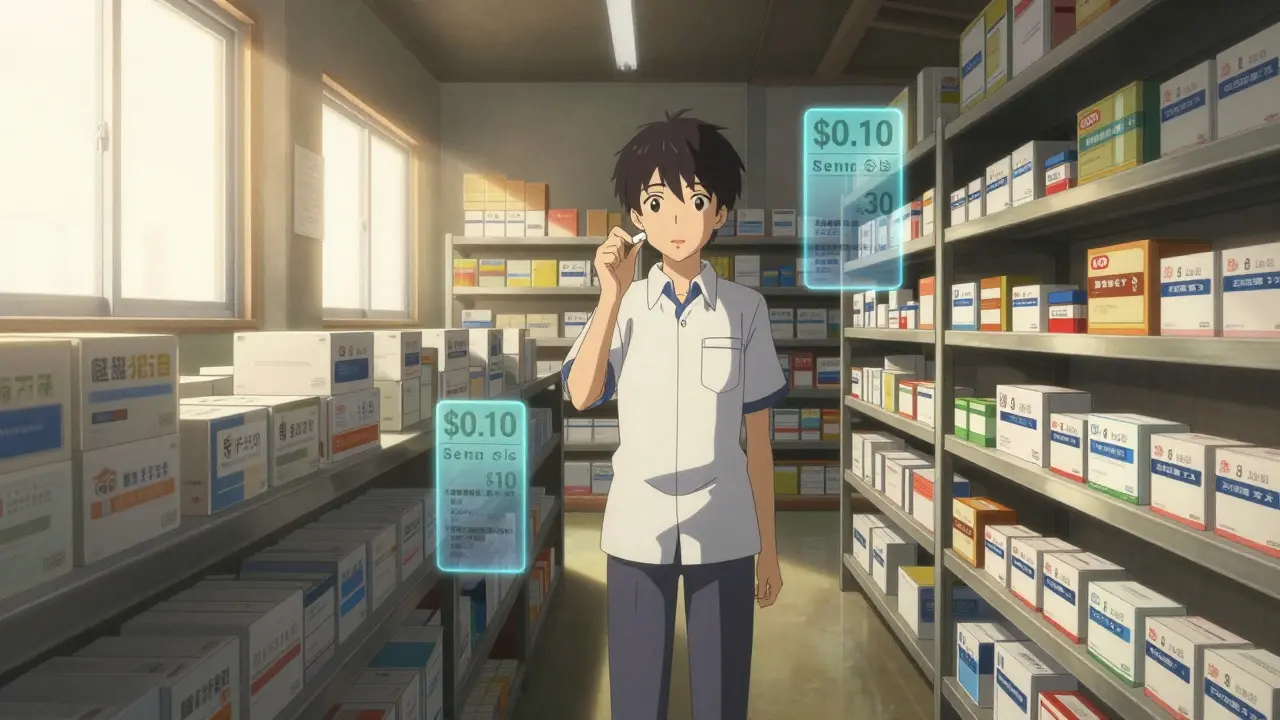
Wholesale economics in the generic pharmaceutical sector is not about bulk discounts or simple markups-it’s a high-stakes game of volume, leverage, and hidden profits. While patients and doctors focus on pill prices at the pharmacy counter, the real money moves behind the scenes through a handful of powerful distributors who control nearly 85% of the U.S. market. And here’s the twist: the cheapest drugs often generate the highest profits for wholesalers.
How generic drugs make more money than branded ones
It sounds backwards, doesn’t it? Branded drugs cost hundreds of dollars per prescription. Generics are pennies. So why do wholesalers make eleven times more profit on a generic pill than on a branded one? The answer lies in pricing power.Brand-name manufacturers hold tight control over their prices. They spend millions on marketing, patents, and clinical trials, and they charge accordingly. Wholesalers have little room to negotiate-they take what’s offered.
Generic manufacturers don’t have that luxury. With dozens of companies making the same drug, they compete on price. To win contracts with big distributors like AmerisourceBergen, Cardinal Health, or McKesson, they slash prices to the bone. That gives wholesalers enormous leverage. They buy a generic drug for $0.10 and sell it to pharmacies for $0.30. That’s a 200% markup. For a branded drug, they might buy at $10 and sell at $13-just a 30% markup.
In 2009, generics made up only 9% of wholesale revenue-but contributed 56% of total gross profits. That’s not a fluke. It’s the system working exactly as designed. Wholesalers don’t need high sales volume on branded drugs. They need high margins on generics. And they’ve built their entire business model around it.
The three-tier system and who really controls prices
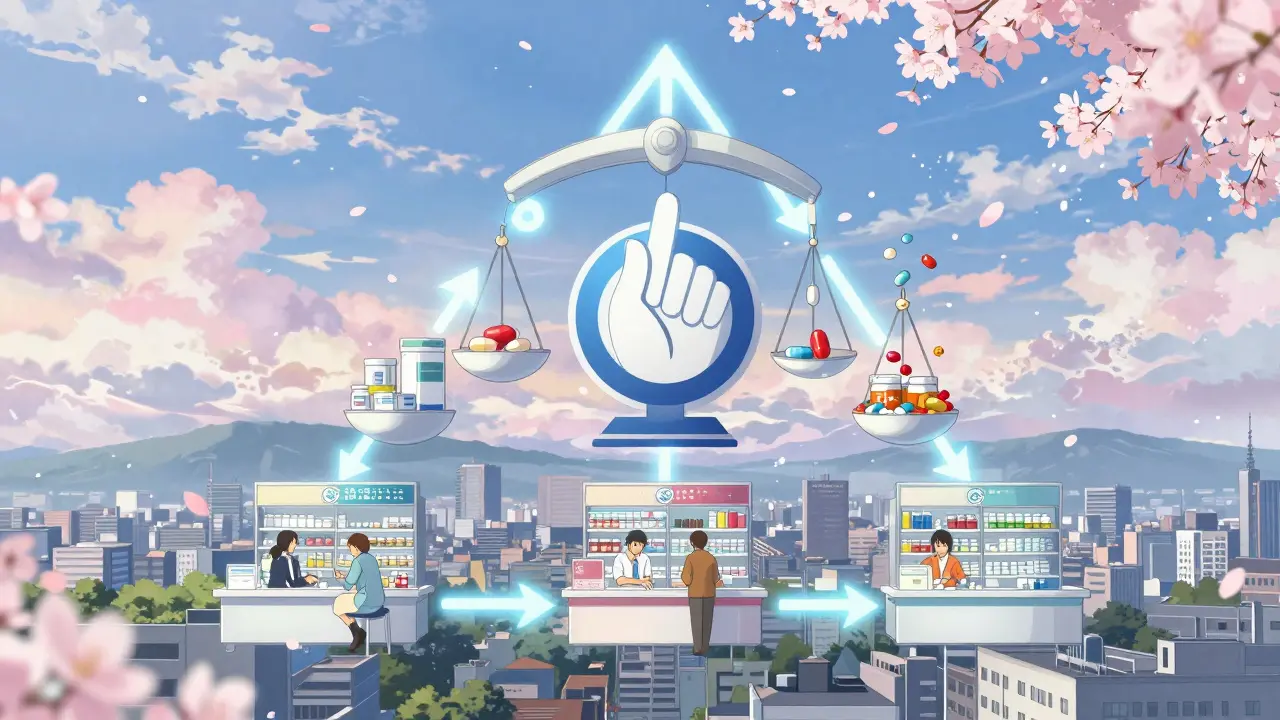
The pharmaceutical supply chain isn’t linear. It’s a triangle: manufacturers → wholesalers → pharmacies. But in practice, wholesalers sit at the center. They don’t just move pills. They set the rules.When a new generic hits the market, manufacturers flood it with supply. Wholesalers choose which ones to buy-and how much. They can delay orders to create artificial shortages. They can favor one supplier over another based on rebate deals. And when shortages happen, prices spike. That’s not speculation-it’s documented behavior.
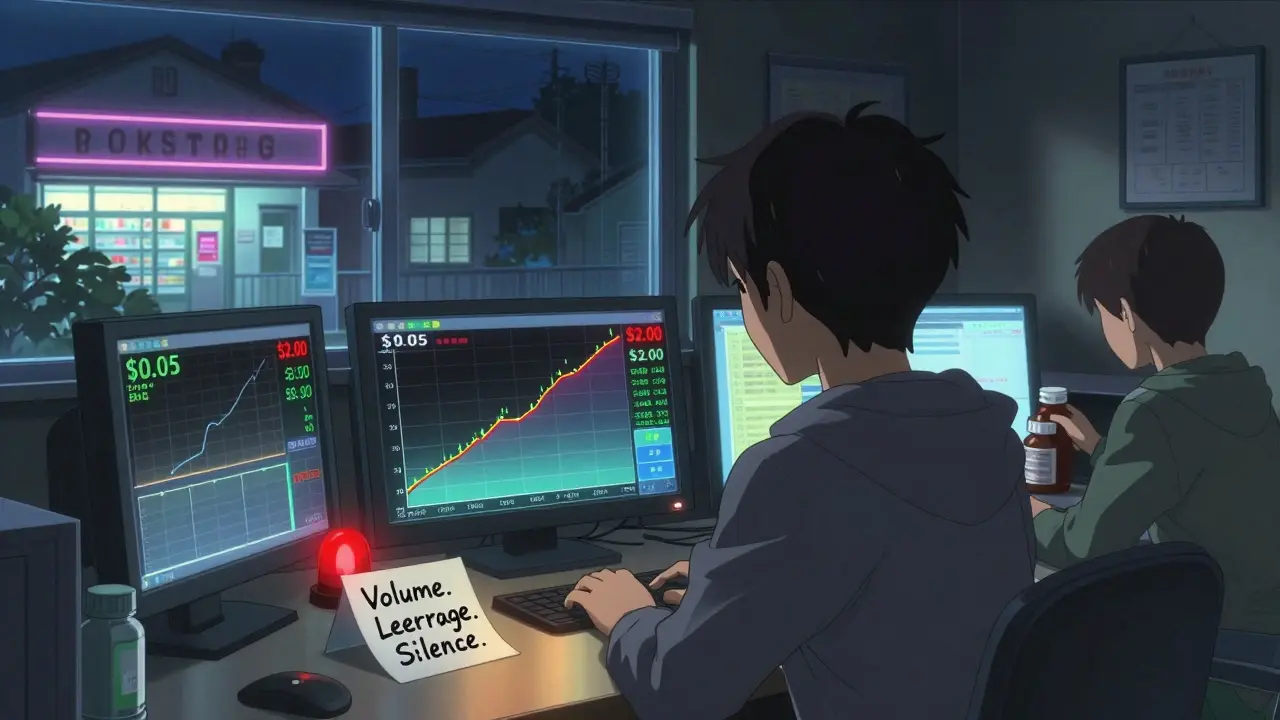
The Commonwealth Fund found in 2022 that wholesalers directly influence drug prices in four key ways: setting generic drug prices, pushing list price increases, competing in specialty drug distribution, and triggering or worsening shortages. A shortage of a $0.05 generic antibiotic can suddenly turn into a $2.00 pill overnight. Pharmacies have no choice but to pay it. Patients pay the final price.
Manufacturers hate this. But they’re stuck. Without a wholesaler, their drugs don’t reach pharmacies. And with only three major players controlling 85% of the market, they can’t walk away. It’s a monopoly disguised as competition.
How pricing actually works behind the scenes
Wholesalers don’t use one pricing method-they use four, depending on the situation.- Cost-plus pricing: Add a fixed margin to production cost. Simple, but risky if competitors undercut you.
- Market-based pricing: Match what others charge. Safe, but kills margins.
- Value-based pricing: Charge more if the drug is critical-like insulin or antibiotics. Rare in generics, but happens during shortages.
- Tiered pricing: The real engine of profit. Buy 100 units? Get 10% off. Buy 500? Get 20% off. This isn’t about helping pharmacies save money. It’s about locking them into big orders so wholesalers can move inventory fast and maximize cash flow.
Take a common generic antibiotic. Cost to produce: $0.08. Shipping: $0.02. Total cost: $0.10. Wholesaler sells to pharmacy at $0.30. That’s a $0.20 profit per unit. Now, if the pharmacy orders 500 units, the wholesaler drops the price to $0.25. Still, $0.15 profit per unit. Multiply that by 500, and you get $75 profit on one order. On a branded drug? Maybe $1 profit per unit. Even at 500 units, that’s only $500 total profit. Generics win by volume and margin.
And here’s the hidden math: wholesalers carry way less inventory for generics. A $10 branded drug takes up $10 in warehouse space. A $0.10 generic? Same shelf space, but 100 times more units. That means lower asset costs, higher return on investment. As one industry analyst put it: “Generic inventory on a wholesaler’s balance sheet is tiny for the volume it moves.”
Why margins are thin-but profits are huge
You’ll hear people say wholesalers make only 2-3% net profit. That’s technically true. But it’s misleading.Net profit is what’s left after rent, salaries, trucks, software, and taxes. Wholesalers move billions in volume. A 0.5% net margin on $10 billion in sales? That’s $50 million in profit. And because they handle mostly generics, their gross margins are sky-high. Gross profit (before overhead) on generics can be 40% or more. Net profit is low because they operate at scale, not because they’re unprofitable.
Compare that to manufacturers. They make 49.8% gross margin on generics-much lower than the 76.3% they make on branded drugs. But they’re also paying for R&D, compliance, and marketing. Wholesalers have none of that. Their job is logistics and leverage. And they do it better than anyone else.
Shortages, inflation, and the new normal
From 2021 to 2022, generic drug prices fell. That was the “deflationary cycle.” Manufacturers kept producing more. Wholesalers kept buying cheap. Everyone thought prices would keep dropping.Then in 2023, shortages hit. One factory shut down. One raw material got delayed. Suddenly, supply couldn’t meet demand. Prices jumped. Not by 10%. Not by 20%. Sometimes by 500%.
Wholesalers didn’t cause these shortages. But they didn’t fix them either. They held back stock. They prioritized big pharmacy chains. They raised prices on emergency orders. And pharmacies? They had no choice but to pay.
This isn’t chaos. It’s strategy. When prices are falling, wholesalers buy aggressively. When prices spike, they sell fast. They don’t need to make drugs. They just need to control the flow.
What this means for patients and the system
Patients don’t see the wholesale layer. They see a $15 co-pay for a generic pill. They think it’s cheap. It is. But the real cost isn’t in the pill-it’s in the system that makes it so easy for a few companies to profit from scarcity, volume, and silence.There’s no fraud here. No illegal activity. Just a market designed to reward scale and control. The same companies that distribute insulin also distribute antibiotics. They move both high-value and low-value drugs through the same pipelines. And they profit the most from the ones that cost the least.
Reformers want more competition. More transparency. More regulation. But with three companies controlling 85% of the market, change is slow. And until someone breaks their grip, the system will keep working the same way: cheap drugs, big profits, and patients paying the price without ever knowing why.
What’s next?
The future of generic wholesale economics depends on two things: shortages and regulation. If drug shortages keep happening-and they will-prices will keep spiking. If regulators step in to force price disclosures or break up distributor monopolies, margins will shrink.But until then, the model stands. Generics are the hidden engine of pharmaceutical profits. And the people who move them? They’re not just distributors. They’re the real arbiters of drug affordability.


Julkaise kommentti